
Patient Education
How a General Dentist Treats Sleep Apnea
General dentistry and sleep apnea treatment
An estimated 22 million Americans have sleep apnea , and well over half of individuals with obstructive sleep apnea have a moderate to severe case. A general dentist studies and understands why sleep apnea occurs and can effectively treat it with oral appliances and other treatment methods.
Many do not know whom to visit when sleep apnea leads to concerning symptoms. While visiting a sleep specialist may be necessary in some cases, a general dentist who offers sleep apnea treatment can also address your concern. The following is a review of sleep apnea and how a general dentist can treat it.
Sleep apnea is a common condition in which the airway in the back of the throat closes while sleeping. This causes the person to quit breathing temporarily. It is not a major health risk, but it does lead to the individual constantly waking up throughout the night and can lead to cardiovascular health problems if left untreated for too long. General dentists focus on all aspects of oral health, and many consider sleep apnea to be an important condition to treat, as it can affect oral health and general health.
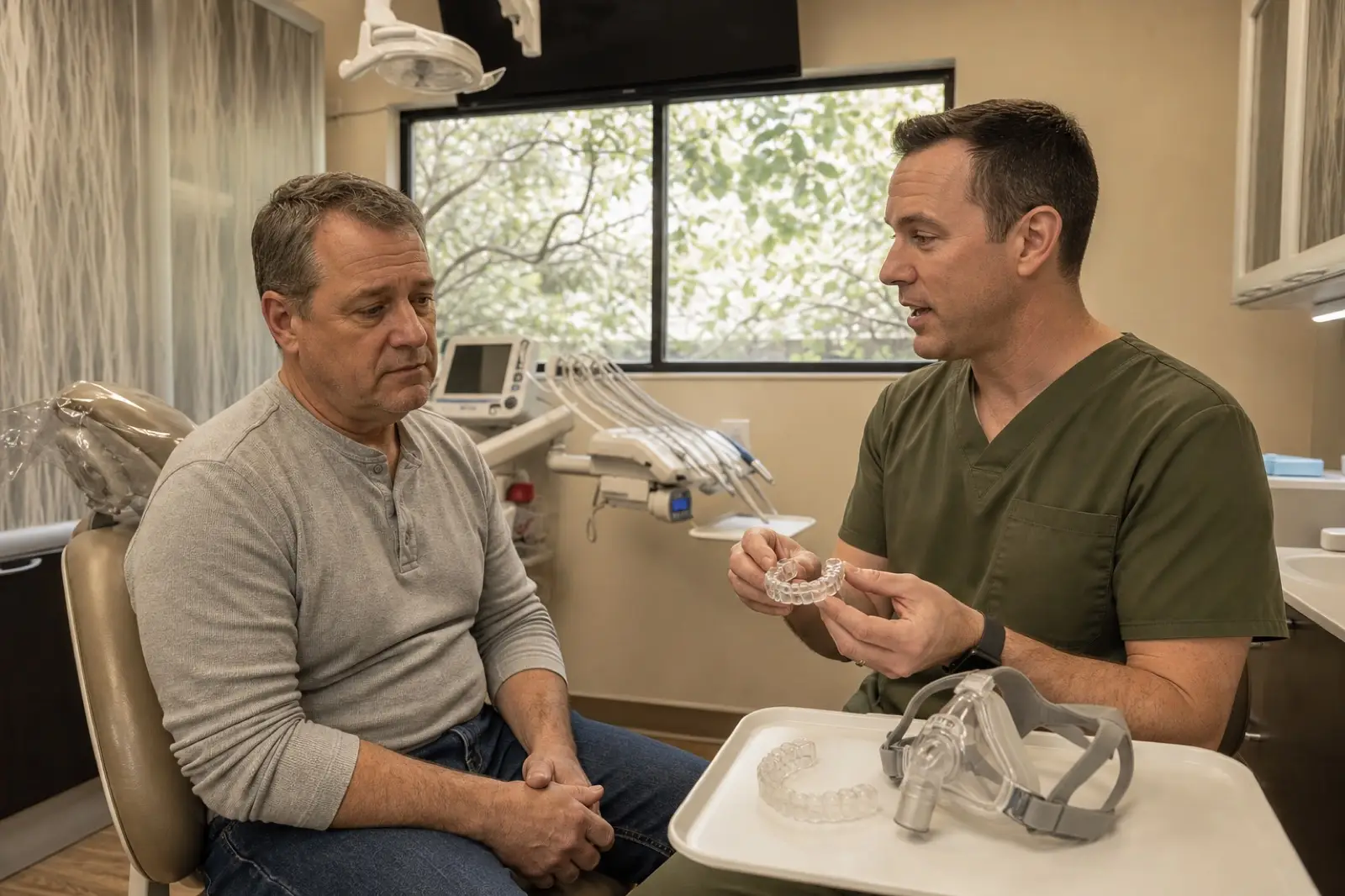
The two main types of treatment for sleep apnea are CPAP machines and mandibular advancement devices. Although CPAP machines are effective, general dentists are typically more likely to recommend a mandibular advancement device, a type of custom mouthguard that keeps the tongue and jaw in the proper position to keep the airway open while asleep. Other treatment options include surgery or medications. Medications are typically only effective for central sleep apnea, and surgery is often only used if less invasive methods of treatment do not work.
The sleep apnea treatment process with a general dentist begins with a consultation. The dentist reviews the patient’s dental and medical history and documents their sleep apnea symptoms and discusses treatment goals. They can then discuss all available treatment options and decide on the best method, which is often a mandibular advancement device.
If symptoms of sleep apnea become problematic or you have received a diagnosis of obstructive sleep apnea, then it is encouraged to seek treatment. Common symptoms include but are not limited to constantly waking up while asleep, having a lack of energy during the day, snoring and having morning headaches. Many patients report long-term relief from their sleep apnea symptoms after visiting a general dentist and starting a treatment plan.
Schedule your first visit with our dental practice
Are you considering sleep apnea treatment from a general dentist? If so, call or send our friendly dental team a message today to schedule a visit. During the visit, we can discuss your symptoms, goals for treatment and treatment preferences to determine the best way to manage your sleep apnea symptoms in the long term.