
Patient Education
When To Choose Dental Implants Over Dentures
When there is a need for a restoration like natural teeth
A partial denture or dental implant can replace a missing tooth. Research shows that most people prefer implants to dentures. Awareness of when to choose an implant over a denture can help prepare you for your treatment. Here are the details on when you must choose a dental implant over a denture.
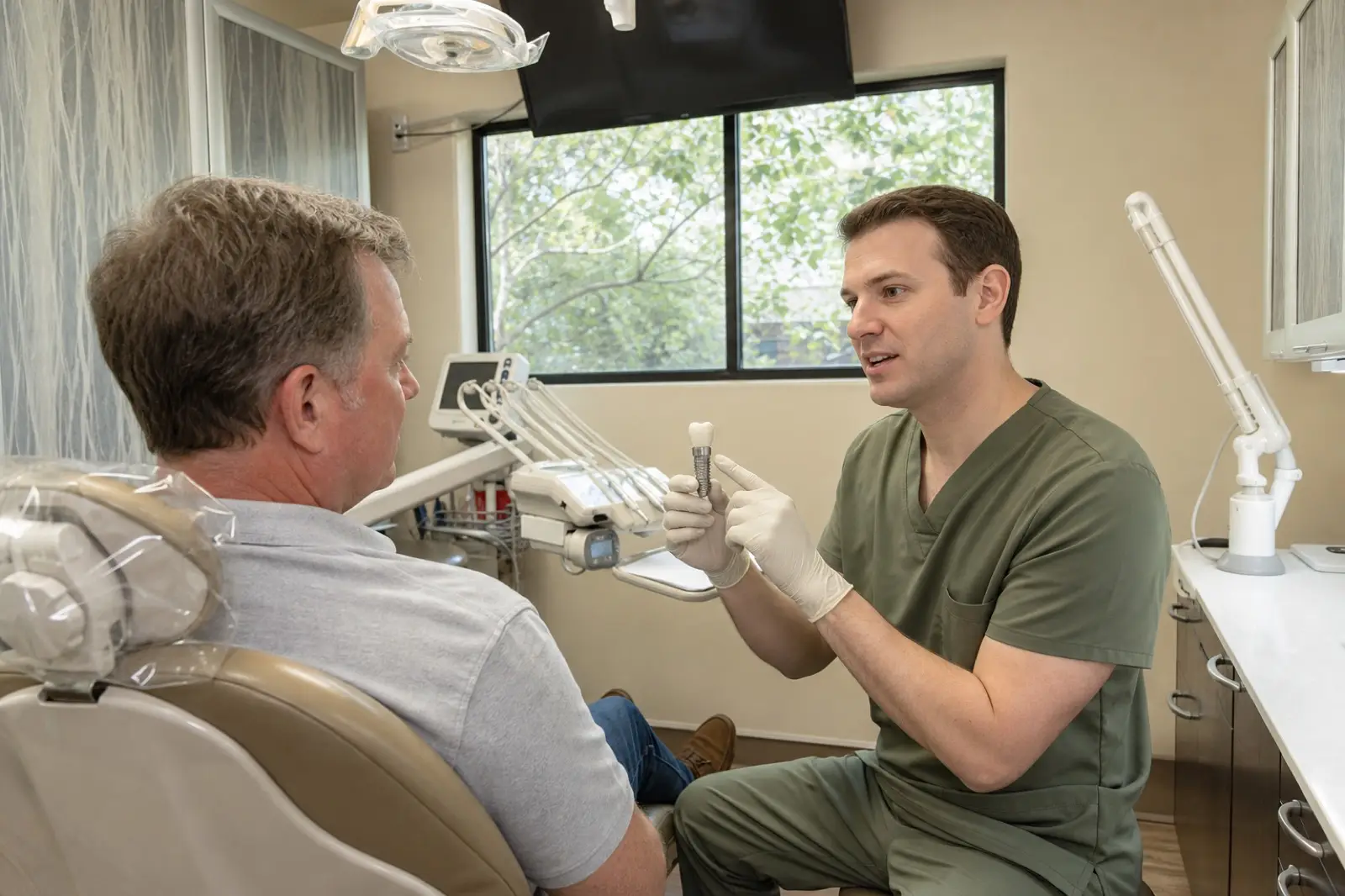
A dental implant is the most stable dental replacement that one can get. It is the gold standard of dental restorations. The titanium rod fuses with the jawbone, which makes it a permanent tooth loss solution. An implant does not need repairs or replacements over time. Proper maintenance and care can make a dental implant last for a lifetime.
The titanium rod is biocompatible. The body will not reject it even if it fuses with the jawbone. A successful merging of the rod and bone will form a strong, solid foundation. The rod acts like the dental root of the lost tooth and anchors the artificial dental structure to the jawbone. The individual will not experience a wiggling or sliding dental implant in the mouth. This restoration will give more security to the individual when performing dental functions.
Clinical studies reveal that tooth loss results in jawbone loss. It removes the dental roots that stimulate the jawbone. Without stimulation, the jawbone thins out. The deterioration of the jawbone impairs its ability to support facial structures. It results in skin sagging and the formation of wrinkles. These adverse effects make an individual look older.
A dental implant can prevent jawbone loss. This restoration will fuse with the jawbone to create a strong bite and an attractive smile. The foundation it creates gives more support to the facial structures. The process smoothens the wrinkles and makes one look younger again.
The jawbone and dental implant will fuse in about three to six months. This brand-new smile will have the strength and stability to withstand the pressures of dental functions. The individual will not need to choose or avoid specific types of food. This effect is ideal for maintaining the individual’s general health.
Research shows that many people prefer dentures to replace many teeth. Yet, a dental implant can make dentures much better. Using an implant to support the dentures can replace many teeth with great stability. It is also a less expensive option to do so.
A denture needs extra attention to keep it in top shape. The individual must clean it separately and soak it in a specific denture solution. The process can be tiring, especially after an exhausting day. A dental implant will need regular brushing and flossing, which is the same care natural teeth need.