
01
Daily brushing
Daily brushing. As soon as teeth emerge in a child’s mouth, it is vital to brush regularly. It is wise to brush at least twice daily through one’s entire life.
Services
The purpose of dental care and oral hygiene is to prevent tooth loss as much as possible. However, there are cases in which tooth loss is unavoidable. When an infection advances to later stages or begins to spread, tooth extraction may become the only option. If a tooth falls out on its own or is knocked out, there is a chance the empty socket can cause the other teeth to begin to shift.
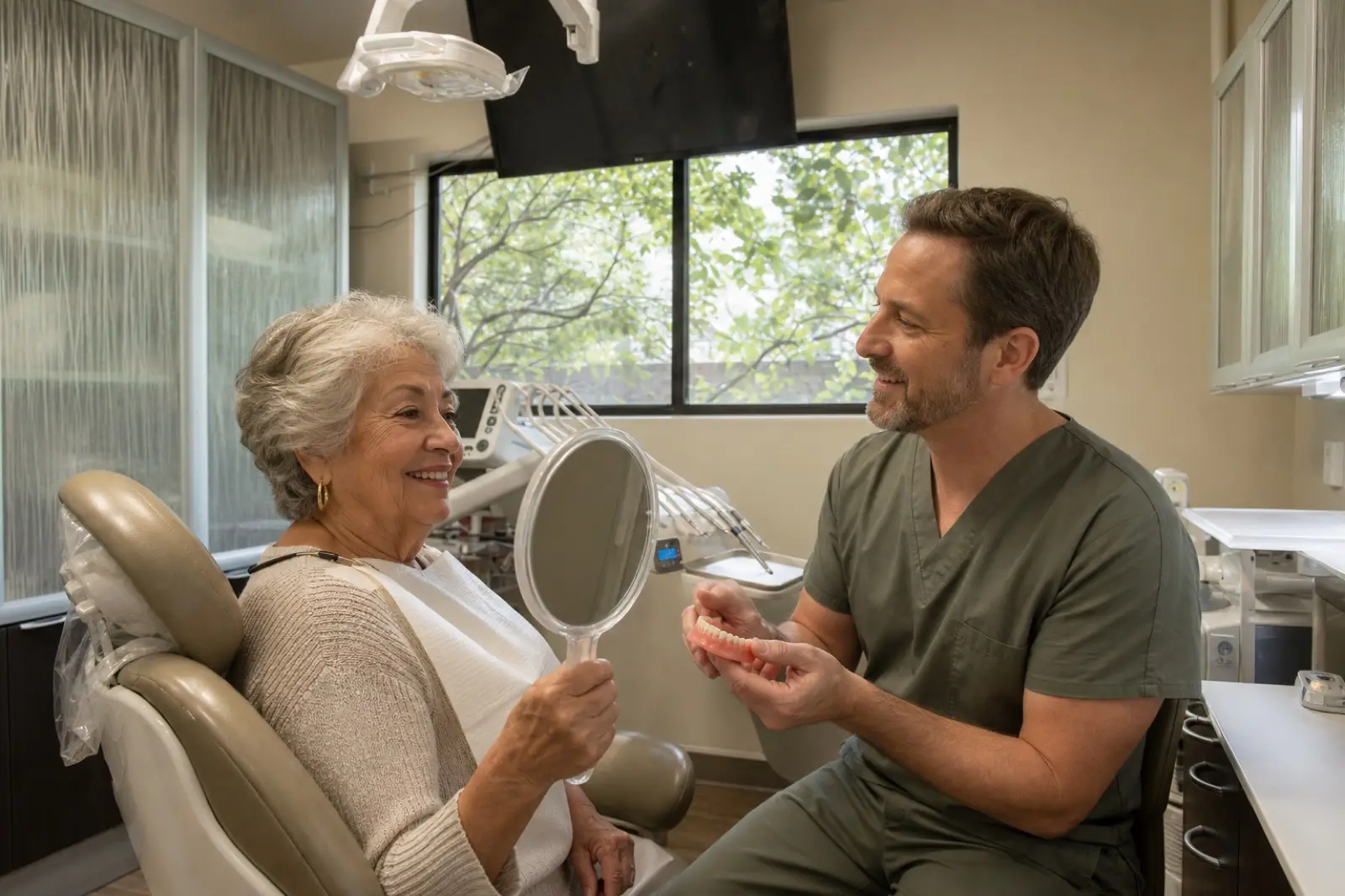
The doctor can help restore missing teeth with dentures or partial dentures. By ensuring there are no more traces of infection in the mouth, dentures can help to prevent the spread of further contamination to the mouth or jaw. Even with dentures, patients will want to continue an oral hygiene routine that involves keeping the gums and mouth clean.
With partial dentures or at least several natural teeth still in the mouth, it is essential to keep up regular oral hygiene methods, including:
01
Daily brushing. As soon as teeth emerge in a child’s mouth, it is vital to brush regularly. It is wise to brush at least twice daily through one’s entire life.
02
Consistent flossing. Daily flossing will remove food from between teeth. Doing this will keep bacteria from growing on the gums and beneath the teeth.
03
Regular visits to the dentist. Patients should visit our dental team at least once every six months. More frequent visits may be necessary for restorative care.
While dentures and partial dentures may not be for everyone, they can help people experience the satisfaction of a full smile and eating favorite foods again. Dentures closely resemble natural teeth. We will make sure the artificial teeth match the color of any remaining real teeth. Dentures can also give a person’s cheeks a more defined shape and appearance.
Dentures and partial dentures only represent one of the many options patients can choose from.
Dentures become a viable option almost every time someone loses their teeth. Even the loss of one tooth can result in the use of partial dentures to rectify the problem. If a person decides to get implants or bridges, they may still wear dentures temporarily until this work is completed.
Note that young people lose their teeth too. One of the most common reasons for this is facial trauma, such as a sporting injury, motor vehicle accident, or a bad fall. These instances can lead to not just missing teeth, but also cracking and breaking.
In addition to this, young people may struggle with cavities. In fact, tooth decay affects people of all ages, especially those who love sugary foods and fizzy drinks. People with poor dental hygiene may also suffer more from caries than others.
Another effect of poor dental hygiene is gum disease, which is sometimes known as periodontal disease. This infection of the gums and the material surrounding the teeth may lead to complete tooth loss over time. People who smoke are more likely to suffer from gum disease than others.
Finally, there are several other health conditions and medications that may result in tooth loss. Diabetes, ectodermal dysplasia, rheumatoid arthritis, and gastrointestinal reflux may all increase the likelihood of tooth loss over time.
Some processes may differ depending on the materials used in making dentures, but it typically advances in the following sequence.
The process starts with taking an impression of the mouth. The dentist then creates a model using dental stone as a cast. The doctor may then ask the patient to try several different sets of sterilized dentures to determine the ideal fit as well as the preferred color and size of the teeth. After these selections, the dentist may then make some adjustments to the cast. Thereafter, it is sent to a dental laboratory for completion.
At the dental lab, technicians may then create a wax version of the gum line. These technicians make the replacement teeth from a material that closely resembles real teeth known as resin. Virtually all labs then seek approval from the patient and dentist before proceeding with the finishing touches.
Following approval, the technician removes the wax and replaces it with acrylic, which looks far more realistic. This process entails boiling to get rid of the wax, drilling holes in the teeth, and then injecting the acrylic. Finally, technicians clean up the teeth and polish the appliance. The entire process may require the patient to visit the dentist’s office four to five times.
When patient’s lookup types of dentures, they mostly come across full dentures and partial dentures. However, these are just the tip of the iceberg. Over the past few years, dentists created hybrids with other dental treatments to provide patients with even more options. You may contact one of our Red Cliffs Dental team members to find out which denture is right for you.
Most commonly used by seniors, these dentures replace a complete set of teeth. They sit directly on top of the gums. Some patients are good candidates for immediate placement. In this instance, the dentist places the previously made dentures immediately after the extraction of the teeth. For everyone else, the dentist may recommend waiting eight to 12 weeks after teeth removal.
When a patient still has teeth to blend in and anchor with the newly created teeth, the dentist may recommend partial dentures. This may require the use of a metal piece to which a pink-colored base is attached. The metal helps to anchor the false teeth to the natural teeth to prevent movement.
This method blends dental implants with dentures. Instead of anchoring all the teeth in place individually, the dentist may add several dental implants that hold the full upper and/or lower set in place. Dentists may use this for partial dentures too. These dentures are not removable once in place. Please note that not all patients are good candidates for dental implants.
When patients prefer to retain the ability to remove dentures, but like the stability of implants, they may opt for overdentures. These are handy in instances where a person has no teeth, as the dental implants provide an anchor that the teeth can sit on. For even more excellent stability, patients may opt for snap-in dentures. In this case, the implants have locator receptors, and the dentures have attachments. These work together to snap the dentures into place for a snug fit.
Dentures and partial dentures are two of the most common forms of tooth-replacement treatment. While there are other options available at our practice, we will determine the most effective option for the patient's specific needs. Every patient’s situation and needs a different solution.
With dental bridges and dental implants, there are a variety of factors to consider when deciding on a replacement option. During a consultation, we will answer any questions the patient has about the various options so they can make an informed decision.
It can be difficult deciding which option is right when deciding on an effective tooth replacement option. Each patient will have to consider the pros and cons while also looking into insurance coverage. During a consultation in our office, we can go into more detail about the specifics. A determining factor is the amount of time a patient can take out of their schedule for treatment.
In most cases, the dental implant process can take several visits over the span of months. With dentures or partial dentures, the patient will most likely need two visits before they can begin wearing their dentures. Along with that, dentures and partial dentures can replace multiple teeth at once as opposed to dental implants, which only replace one at a time.
Though dentures are durable and help the patient once again bite into food, these appliances can break. Dentures can also warp or get dirty, so it is vital that people follow proper maintenance guidelines, as described in this article on the American Dental Association website. Our team at Red Cliffs Dental will counsel each patient on proper care to extend the life of their dentures. Though, ultimately, it is up to the patient to be diligent in routine care and contacting the dentist when problems arise.
After eating a meal, a patient should remove their dentures and rinse the appliance thoroughly with water, removing excess food. Also, patients should brush the dentures with a soft toothbrush and non-abrasive toothpaste. When it is time to retire for the night, the person should remove the dentures. Some denture wearers soak their dentures in a solution. You may contact our team to see if a denture solution is recommended for your care routine.