
Patient Education
Exploring the Role of Dental Implants in Tooth Replacement
How dental implants replace missing teeth
When a patient has lost a tooth, they often feel self-conscious about the gap, which a dental implant can address. It can mimic a natural tooth in multiple ways and provide many of the same benefits as a natural tooth. While it is true that getting a dental implant is a more involved process than other options, such as a removable denture, it is an effective form of tooth replacement that can restore a smile functionally and aesthetically.
Patients who are missing at least one tooth can be good candidates for dental implants . These are beneficial when replacing a missing tooth for the following reasons.
A dentist installs a dental implant by opening the gum tissue and exposing the jawbone. Then, they insert a metal post into the jaw before closing the gum tissue. The patient will need to wait multiple months for the jawbone to incorporate the post (via a process called osseointegration).
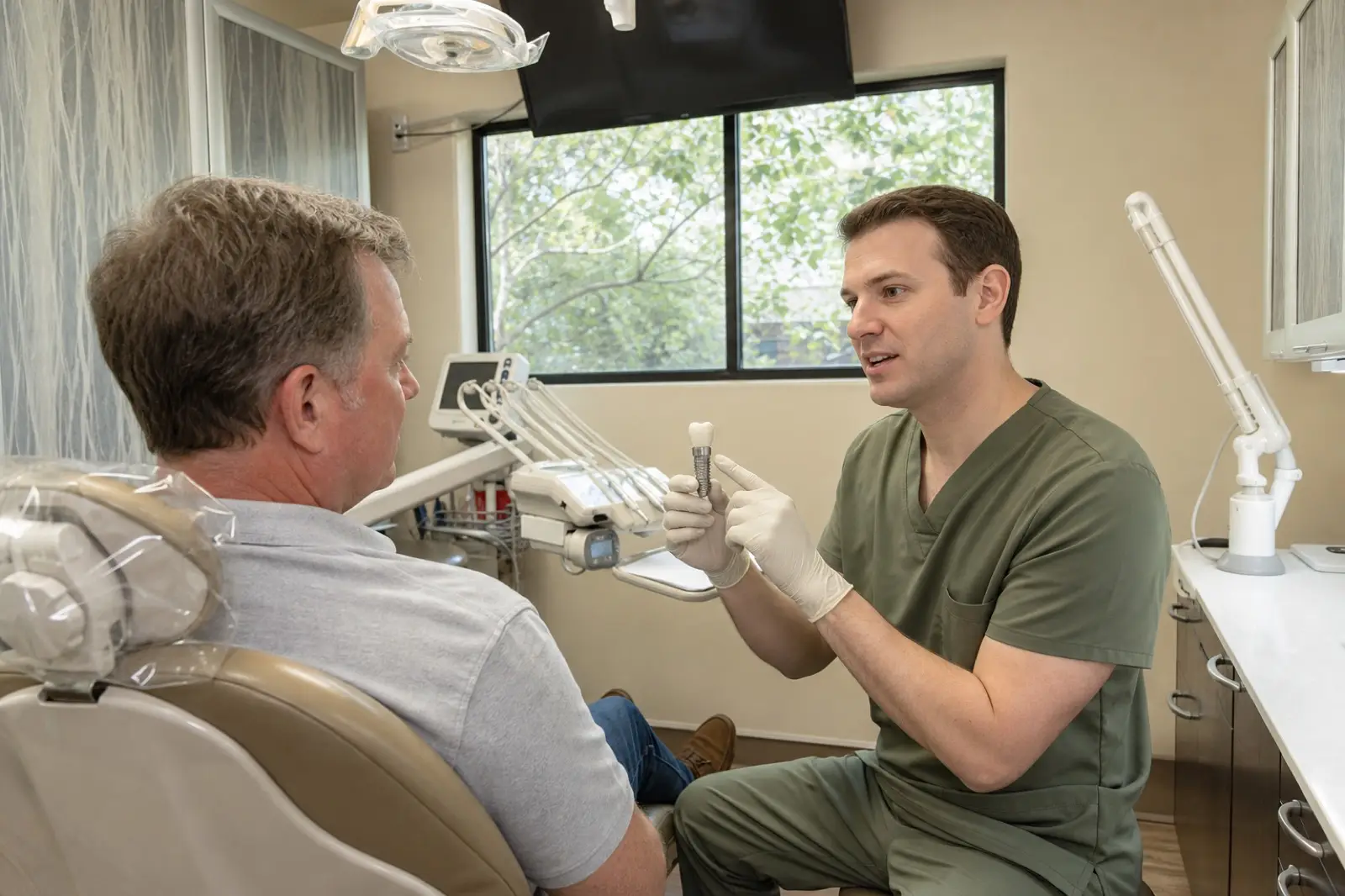
Once this process is complete, the post serves as a tooth root that stimulates the jaw like a real tooth's root. This prevents jawbone atrophy, which can make a person’s face look sunken, and ensures that the implant is strong and supported. The post is then topped with a realistic crown so the overall implant blends in with the rest of the teeth.
Another reason a dental implant is a good tooth replacement option is that it supports the surrounding teeth. If a patient has a gap in their smile for an extended period, the nearby gums can become soft, and biting forces can push the teeth toward the opening, which can leave teeth close to the gap looser than they were before. A dental implant sits in the open spot, stimulating the gums and providing support to nearby teeth so they stay firm in their sockets.
Dental implants are highly customizable, so dentists can seamlessly match them to the patient’s smile. From the shape and texture of the tooth to the exact shade of the surrounding teeth, the dental implant will integrate so well that no one can tell that it is not a real tooth. As an added benefit, it will not fall out like removable dentures can.
After a tooth is lost, the other teeth nearby can slowly begin to creep into the gap, leading to crooked and misaligned dentition. A dental implant closes the gap with a functional prosthetic (rather than merely a decorative one), preventing the nearby teeth from shifting out of their natural positions. This keeps the smile aligned and ensures that the patient can maintain good oral hygiene because all the teeth are accessible to a toothbrush rather than bunched together and hard to reach.