
Patient Education
Maintaining Dental Implants: Tips for Your Long-Term Oral Health
Dental implants offer a permanent solution for missing teeth. They look, feel, and function like natural teeth, making them a popular option for those looking to restore their smile. However, while dental implants are durable and designed to last a lifetime, they require proper care to ensure their long-term success.
Similar to natural teeth, dental implants need regular cleaning to prevent plaque buildup, which can lead to gum disease or peri-implantitis. Peri-implantitis is a condition similar to gum disease that affects the soft tissues around the implant. Patients with dental implants should brush their teeth once a day with a soft-bristled toothbrush and use non-abrasive toothpaste. Additionally, flossing at least once a day is essential to remove food particles and plaque between the teeth and around the implant.
Using the correct tools can make a significant difference in maintaining dental implants. Consider using an interdental brush, which is specifically designed to clean between teeth and around implants. These brushes come in various sizes, so choose one that fits comfortably between the patient's teeth without causing discomfort. Additionally, water flossers are an effective tool for cleaning around implants and can be more useful than traditional string floss. This device uses a gentle stream of water to remove debris and bacteria from hard-to-reach areas and between the implants and natural teeth.
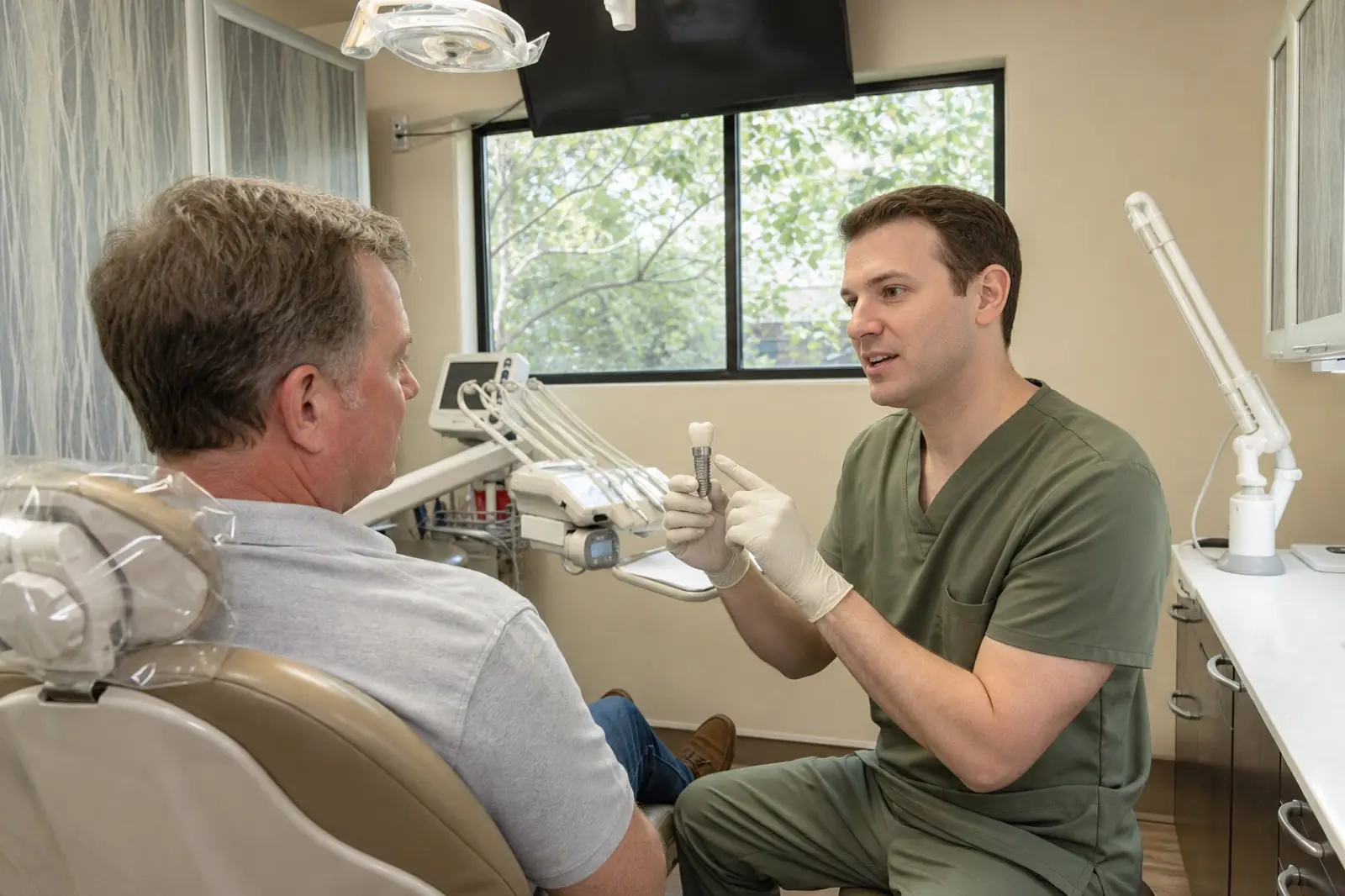
Routine dental visits are essential for patients with dental implants. During these appointments, the general dentist will examine the implants to ensure they are functioning correctly. They will also check for any signs of complications, such as infection, a loose implant, or gum recession around the implant.
After the examination, the dentist will perform a professional cleaning. This part of the appointment allows the dentist to remove plaque and tartar buildup that a patient cannot remove through regular brushing and flossing. The dentist may also recommend visiting more frequently than twice a year, particularly in the first few years after receiving dental implants.
While dental implants are strong, they are not indestructible. Chewing on hard objects like ice, hard candy, or popcorn kernels can damage the restoration — typically a dental crown, bridge, or dentures — attached to the abutment, the implant itself, or even the underlying bone. Sticky foods, such as caramel and chewing gum, can also pose a risk as they can pull at the restoration and place undue stress on the implant. It is best to avoid these types of foods or consume them with caution.
Smoking and other tobacco use are proven to be detrimental to one's overall health. However, it can significantly impact the longevity of dental implants. Smoking can impair blood flow, which is essential for healing and maintaining healthy gum tissue around the implant. Smokers are also at a higher risk of developing peri-implantitis, which can lead to implant failure.
Bruxism, or teeth grinding, can harm both natural teeth and dental implants. The excessive force exerted by grinding can lead to implant failure over time. If a patient or their sleeping partner notices that they grind their teeth, especially at night, they should talk to their dentist about getting a nightguard to protect their teeth and implants while they sleep.