
Patient Education
What to Expect From the Dental Implant Process
A dental implant is an effective way to replace missing teeth, and it offers benefits that other options, such as dentures, do not. However, before deciding whether dental implants are suitable, you should have a complete picture of how they work and what you can expect.
Not all patients are good candidates for dental implants . The good news is that a person who is not originally a candidate can sometimes undergo additional treatments to become a viable dental implant patient.
The dental implant process is lengthy, often requiring more than a year from the initial consultation to the complete healing of the implant. Before committing to this procedure, patients should understand how the process works.
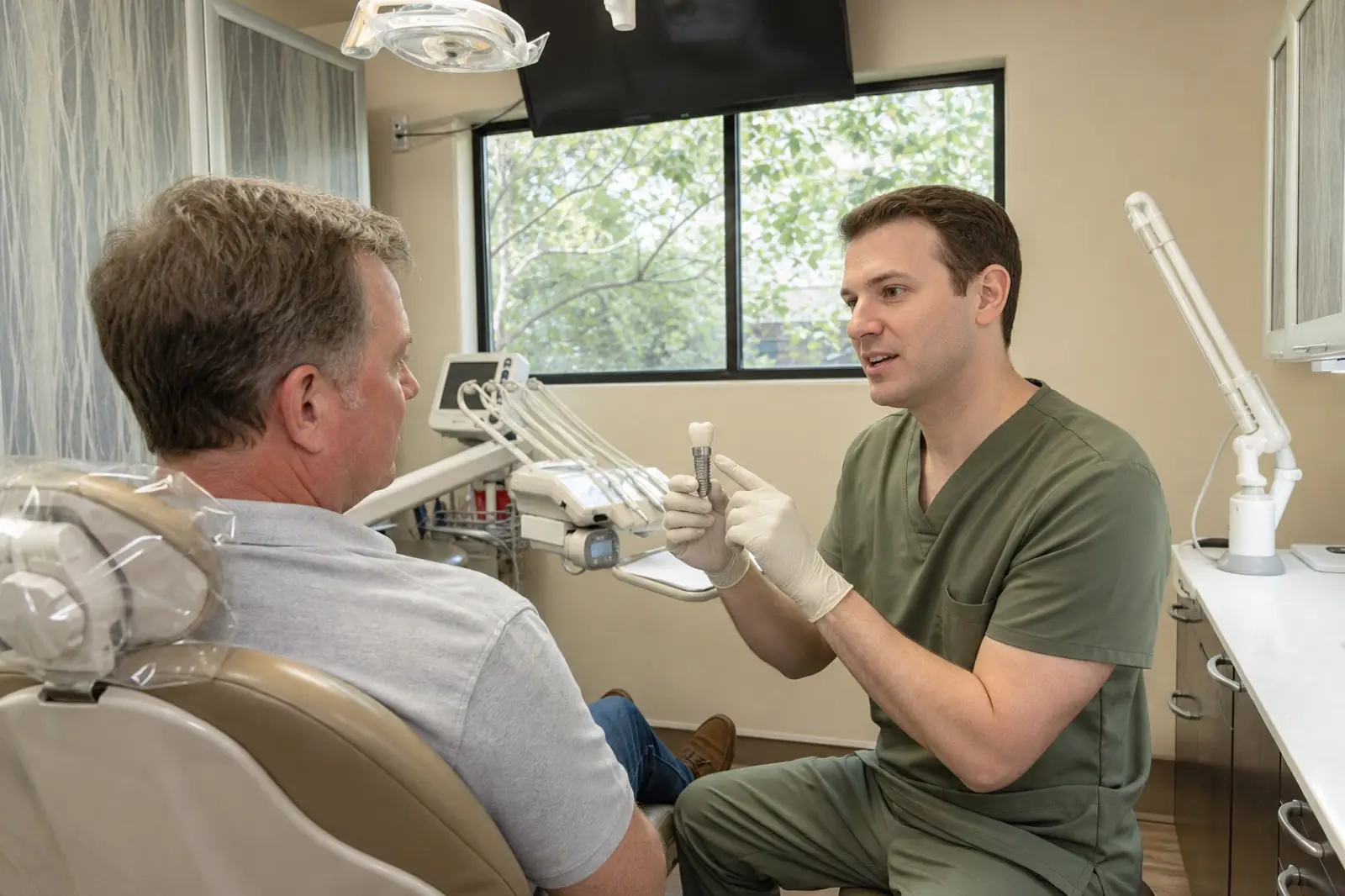
First, the dentist will evaluate the patient for the viability of a dental implant. This includes taking comprehensive images of the area, including the socket that is missing the tooth, the nerve formations in the area, and the jawbone where the implant will rest.
In some patients, the jawbone is not dense enough to support an implant. If this is the case, a patient can undergo a bone grafting procedure to bulk up the area in preparation for the installation of an implant post.
Once the patient is ready, either through bone grafting or by already having a healthy jawbone, the dentist will make an incision into the gums to access the bone tissue. Then, they will prepare the bone for post placement and insert the post, often by screwing it into the jawbone. Once the post is in the proper position to support the implant, the dentist closes the gums to allow the post to heal.
Now that the implant post is in place, it needs time to fuse with the jawbone. This process, called osseointegration, can take six months (or more for some patients). The jawbone will heal around the implant, enabling it to sit sturdily in the mouth and stimulate the bone like a real tooth root.
Once the healing process for the post is complete, the dentist can install the false tooth on top. It may be screwed on or affixed in place using dental cement.
The dental implant is crafted in a fabrication lab based on a mold of the patient’s mouth to ensure that it fits the empty socket appropriately. This preserves the patient’s bite and maintains the aesthetic of their smile.